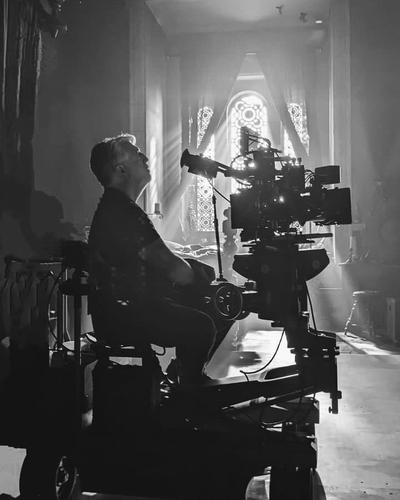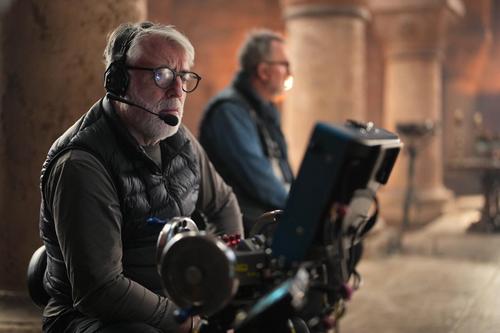


Sean Savage - A Man for All Seasons
An interview with A-camera Operator Sean Savage on his career, techniques, the ACO and shooting every episode of Game of Thrones
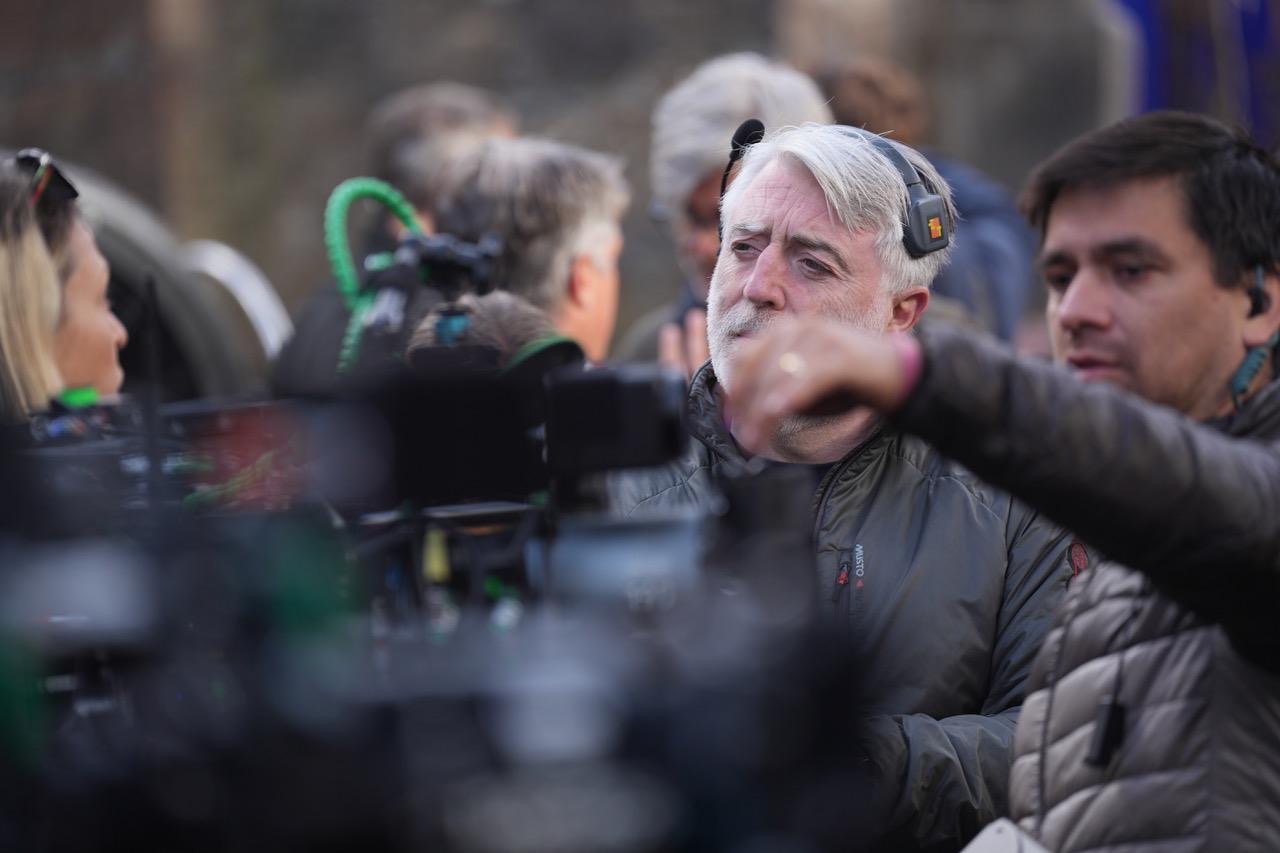
It is a rare moment of downtime for Sean Savage. He’s wrapped up on House of The Dragon for the year and is preparing to switch sorting hats, taking a vacation from King’s Landing for a spell at Hogwarts. He joins us in an upbeat, but contemplative mood, and what quickly becomes clear about Sean, beyond a consistently kind, calm and assured manner, is that as much as he considers his own career, he also thinks a lot about those following after him.
“I’m at a point in my life where I’m starting to see cycles of about fifteen years. I have
a daughter, who’s now 31, but when she was sixteen and doing her GCSEs, she came back from school and said, ‘Dad, we’re watching this amazing film for media studies, ‘Nil By Mouth’. I was able to say, ‘Your dad was the focus puller on that.’ That was my last focus-pulling job, because I started operating in 1996, so next year that’ll be thirty years as a camera operator.”
First Turn
Camera departments have a clear hierarchy, with a standard path for career progression, but for Sean, the route to becoming A-Camera Operator on some of the biggest productions on the planet was actually an accelerated one, thanks to his start as a trainee at the BBC.
“My birthday is in August, and I was the youngest in my class, so I was still 16 years, ten months old when I started at Ealing Studios, in the 80s. At that time, it was owned and run by the BBC. Any BBC production that required film cameras was run out of Ealing, especially in London and the South. There were 73 teams, running all over the globe, shooting more 16mm Kodak than the rest of the world put together.”
With his foot in the door, Sean was quick to make the most of the opportunity he had been given.
“I did everything from children’s shows and daily news reports in London, to those awful inserts you used to see on the likes of Hi-de-Hi! to ‘Allo ‘Allo, when they cut from studio to exteriors. They were a lot of fun, but only now, after 40 years in the industry, have I got the confidence to tell anyone I worked on ‘Allo ’Allo!” laughs Sean.
“As I got a little bit more experience, I got allocated ‘Screen One’ and ‘Screen Two’ dramas, and documentaries like ‘Panorama’ and ‘Arena’. I was doing that from ‘84 to ’90 and then I started teaming up with DPs at Ealing who were concentrating more on drama. As the BBC got into feature films, I was able to work on those as well.”
Sean is very much aware that his journey is not one that can easily be replicated today.
“I went from trainee to focus puller in about 7 or 8 years. I had focused on my first feature at 23 or 24 years old, because at that time, the BBC was able to give a lot of people those kinds of opportunities. Now, there are plenty of talented people who could do that, but the industry doesn’t necessarily allow people to do that anymore. When the BBC sold off Ealing, a lot of those opportunities were lost with it.”
In One Move
In the wake of that loss, Sean and others were able to bounce back, making the most of their BBC experience to go freelance.
“There were a lot of angry people when Ealing was sold off. A lot of really clever, wonderful people were made redundant, and one in particular was Remi Adefarasin, a beautiful man and an extraordinary DP. I was his assistant, and then I became his operator.”
As it turned out, teaming up with Remi put Sean onto yet another fast track.
“Remi went from a BBC cameraman to lighting the second unit on ‘The English Patient’ in one move. A year after that, we shot the main unit on ‘Elizabeth’, for which he was Oscar-nominated. He’s an extraordinary talent, and I was very lucky to be on that trajectory with him. We were in Turkey shooting a Hallmark production of ‘Arabian Nights’ in 1997 when they announced the Oscar nominations. Someone ran over to Remi, screaming, ‘You’ve been nominated for an Oscar!!’ Of course, we all asked who else was in the running, and it was [Janusz] Kaminski for ‘Saving Private Ryan’. It was one of those wonderful years for cinema,” laughs Sean, magnanimously. “But Oscar nominated within a year or so of leaving the BBC? That’s not bad really!”
A Little-Known Show
As Sean’s career continued, working with Remi and others, he went on to bigger and bigger projects, until…
“I was lucky enough to go to Belfast in 2010 on that little-known show, ‘Game of Thrones’, which I had a long tenure on – almost nine years. David Benioff and Dan Weiss are wonderful people and showrunners, so all credit to them. They found themselves in the position of being custodians, almost guardians of their script and the source material, so they found producers and crew who would take a similar approach to their roles - like Bernie Caulfield, who was basically our on-set producer. I doubt I’ll ever get to work with anyone quite like that again. She just valued the people making the show more than anything, taking great care of us. Between the writing, the care and the professionalism? That show was the pinnacle.”
Care and professionalism. For Sean, they are intrinsically linked, and this combination feeds back into the work.
“It was a family. Maisie Williams was nine when she did episode one, and she was eighteen when she finished on Season Eight. Sophie Turner was pretty much the same, eleven to twenty. Kit [Harrington] too. Like any bond or friendship, it builds and builds, and you develop a shorthand as well. I loved it! Every time we reunited each season, there was that excitement, but also the ability to jump straight into it. I just love that level of trust. It’s a big thing for me.”
Responsibility
Along with the bonds of trust Sean forms with cast and crew comes a sense of responsibility that he takes very seriously.
“Something I really enjoy about long arc, multi-episode, multi-directional shows, as opposed to a feature, is that if you keep returning to it as the operator, then you have an enormous responsibility to maintain the look of the show. You have new directors and DPs coming in with each season, so showrunners and producers love the fact that they can trust you to be the glue.”
It’s this reliability that has seen Sean invited back to King’s Landing for House of the Dragon.
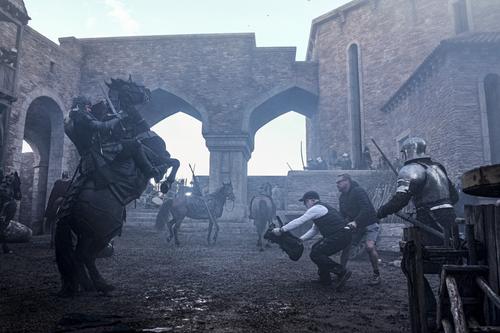
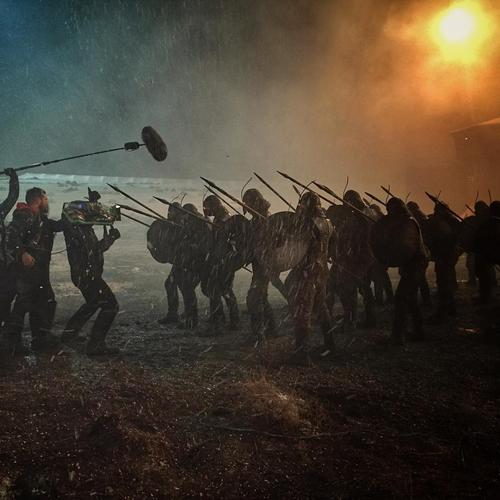
“It’s my sixtieth birthday next year, and we’re back into it on House of the Dragon, running around with blokes on horses and swords and spears. My team are always very solid. They’re very, very good at what they do. I had a producer come over to me the other night, and he hadn’t been on set with us a lot, but he just said, ‘Thank you very much. I don’t have to come to your set. You finish every day. It looks amazing. There’s never going to be an issue with the A-camera on ‘Fire Unit’.” Sean sits up straight, not boastful, just assured, with a wink and a nod. “That’ll do me. That’s the job. That’s my personality.”
This sense of responsibility isn’t just focused on the art, but also on the business of filmmaking.
“This season of House of the Dragon has just cost $400 million. $65million for the first episode. Kevin de la Noy, our main producer, said, ‘Savage? When the director tells you what to do, please listen, because it’s costing me $11 a second.’ I said, ‘Sorry, Kevin, what did you say?’… He said, ‘Very funny!’” A wry smile crosses Sean’s face before acknowledging the responsibility he has. “That’s the truth of it, though. If I have to go back and double-check - ‘Do you want a 47mm lens or a 40mm?’ I’ve just spent $300 on a sentence. Everything needs to be reliable - me, my team, the equipment, everything.”
‘A’ to ‘B’
Steadicam is now a standard piece of equipment on any set, usually assigned to the A-camera. However, the ‘Fire Unit’ runs a little differently.
“I wore Steadicam for 16 years, but I’m at a point where I bring enough value to the production to hire without it. I’m A-Camera on ‘Fire Unit’, and B-Camera is now the Steadicam. There’s a basic principle to Steadicam. It’s balanced, it’s sprung, it’s very clever, and it hurts, no matter what people tell you!”
Sean may have hung up his Steadicam rig for the last time, but he still has a say in when it is used.
“As to the aesthetic of Steadicam, versus dolly, crane or handheld, I still have an influence on that, especially if I’m communicating well with the DP and the director. ‘House of the Dragon’ is a particularly good example of that, where we have four DPs, and we’re all very much of the mindset that if you don’t have to go with the Steadicam, then going on a telescopic arm with stabilisation or a dolly on rail is preferable. We always finish on time, so let’s do it right. I like classic, cinematic moves.”
One tool for many scenarios
To achieve these cinematic moves, Sean has a standard methodology that he relies on for most of his work.
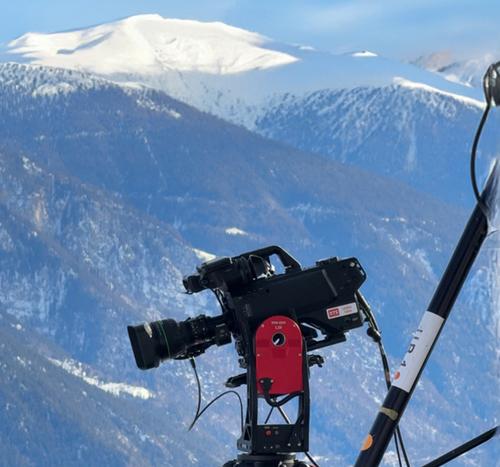
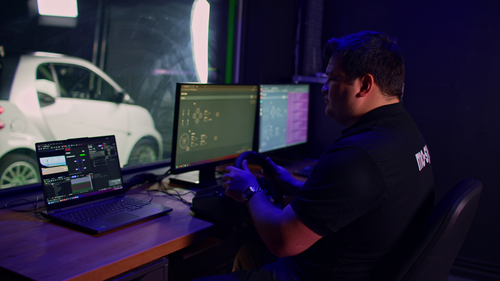
“I own a Mo-Sys L40, which is a two-axis non-stabilised remote head. It’s very strong, very powerful, and it’s not temperamental. As long as it’s balanced properly, it’s a very, very tolerant head. I shoot about half of any show with it – pretty much any shot that doesn’t require stabilisation. I even use it on small jibs and non-telescopic arms up to about 20ft. If there’s a dolly shot to be done, 75% of the time I’ll use the L40, because I think the flexibility is far better. You get all the dynamic moves, all the fun of the underslung mode, and the grip doesn’t have to push me around on the dolly. There’s no tech - my grip and camera team are very ‘au fait’ with it. I have my handwheels, monitor, radio unit, the whole setup all mounted on a magliner, where we also keep the head. I can just sit at one end of it and operate. It’s fantastic!”
Sean recently took the opportunity to work with the newest Mo-Sys remote head.
“It’s the same with the L20. We took it with us to shoot ‘Young Sherlock’ in Cádiz, Jerez and Seville, filming in Spain for six weeks. It’s excellent. All the moves I did with it were smooth and accurate. It’s very small, to its advantage. If you’re on Fast and Furious, or car commercials, or confined interiors, I’d hire it immediately. It has the right technology and the pedigree because it’s got the same systems as the L40.”
There’s a twinkle in Sean’s eyes as he starts to dive into the technology.
“I’m probably getting a bit techy, but the problem with some of the other non-stabilised two-axis heads out there is that they’re belt-driven, so there’s too much ‘play’. If I use a belt-driven head with a 75mm on the actor and they turn their head very slowly, if I try to follow, I’m looking at frame lines and crosshairs, and nothing is happening! They have nowhere near the capacity of the L40.”
Handwheels
Regardless of what head Sean is operating, or what that head is mounted on, Sean has one preferred way of working.
“I operate with handwheels.”
Why?
“Because I’ve never operated with a joystick!” He laughs. “It’s cultural. It’s historic. I spent time on film sets with geared heads. It took me ages to learn the wheels. I think I was a slow learner, but I caught up, and I’m allegedly quite good at it…”
Sean’s eyes wander, almost bashful, before returning to the subject of the technology.
“The joystick is a perfectly good system, but I can usually tell because there’s a slight sway… That said, I have seen some amazing joystick operation, but people do seem to be coming back to wheels. We had a lot of drone work on ‘House of the Dragon’, with XM2s, and at least half the operators were using the wheels.”
Sean may prefer cinematic moves, but he is more than comfortable using new technologies to achieve them.
“I’ve actually operated drones with wheels myself. I was in Budapest on a feature. They were a very competent drone team, and the pilot was very good, but the operator was more a pilot who could also operate, and there was no cinema about any of the shots... So, we asked, ‘Can we use wheels with that?’… The shots turned out very well, and the whole process was really quite satisfying.”
Cranes
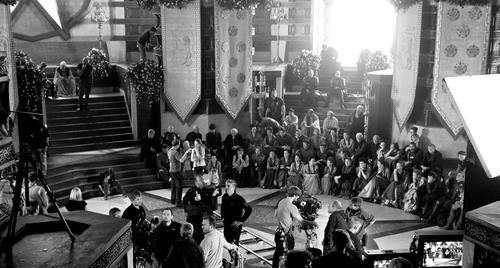
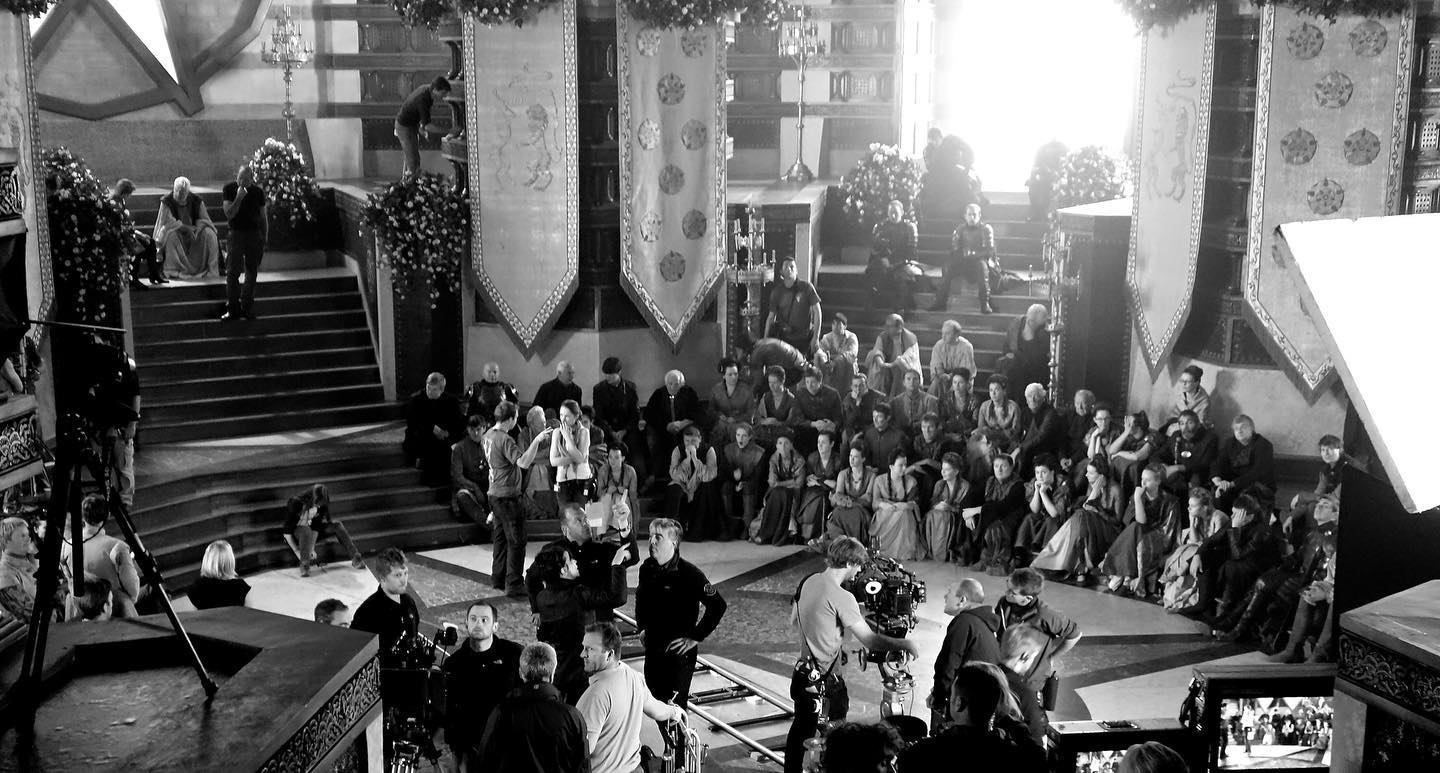
Of course, from banquet scenes to those dynamic, cinematic moves that punctuate the battles for Westeros, Sean is never happier than when he gets to bring out the big toys.
“Telescopic cranes have given us the ability to create a straight line from A to B, with a combination of telescope and swing. Any crane shot that is going to work is absolutely about where you put the column - the fulcrum of the crane. A lot of operators will step away from that process – ‘put it where you want it,’ but I love being a part of it. If you want to give yourself that lovely scale, you have to accommodate the amount of swing you’re going to use in the shot, putting the fulcrum as far away from the opening subject as possible.”
Sean explains his on-set process for preparing a crane shot.
“I’ll sneak into rehearsal, and the DP and I will exchange glances for 20 minutes, as we suss out the hot point of the sky or where the backlight is, because we’re only going to shoot into the prettiest part of the set. Then the DP will give me a basic briefing on how they want to start the shot, like starting close on a plate, and then pulling back across a big dining table to show the lead actor and then revealing the other guests. At this point, I’ll have my key grip with me, and the fun can begin! I love it, and I’m probably a little obsessive about it, because I’ve already visualised what the beginning and the end frames are before we’ve even put the camera on the crane.”
The precision of Sean’s process and his attention to detail stem from his years of experience working with less advanced technologies.
“Very often I will reverse engineer shots, which comes from the days before we had remote head technology. You would start comfortably at your end position, on a dolly with a fluid head, and then the grip would push it back down the rail, and you would pan back to find your starting position. That way, you would start twisted up, usually in the most uncomfortable position imaginable, and then, as the shot opened up, you got more comfortable for a smooth finish. With remote heads, you don’t have to do this, but I still like to reverse engineer the shots, and for really tricky ones, we’ll have waypoints. For example, ‘As we pass this pillar, we should be here,’ and the grip will put down a little laser mark. It’s wonderful, wonderful fun. I love my crane shots!!”
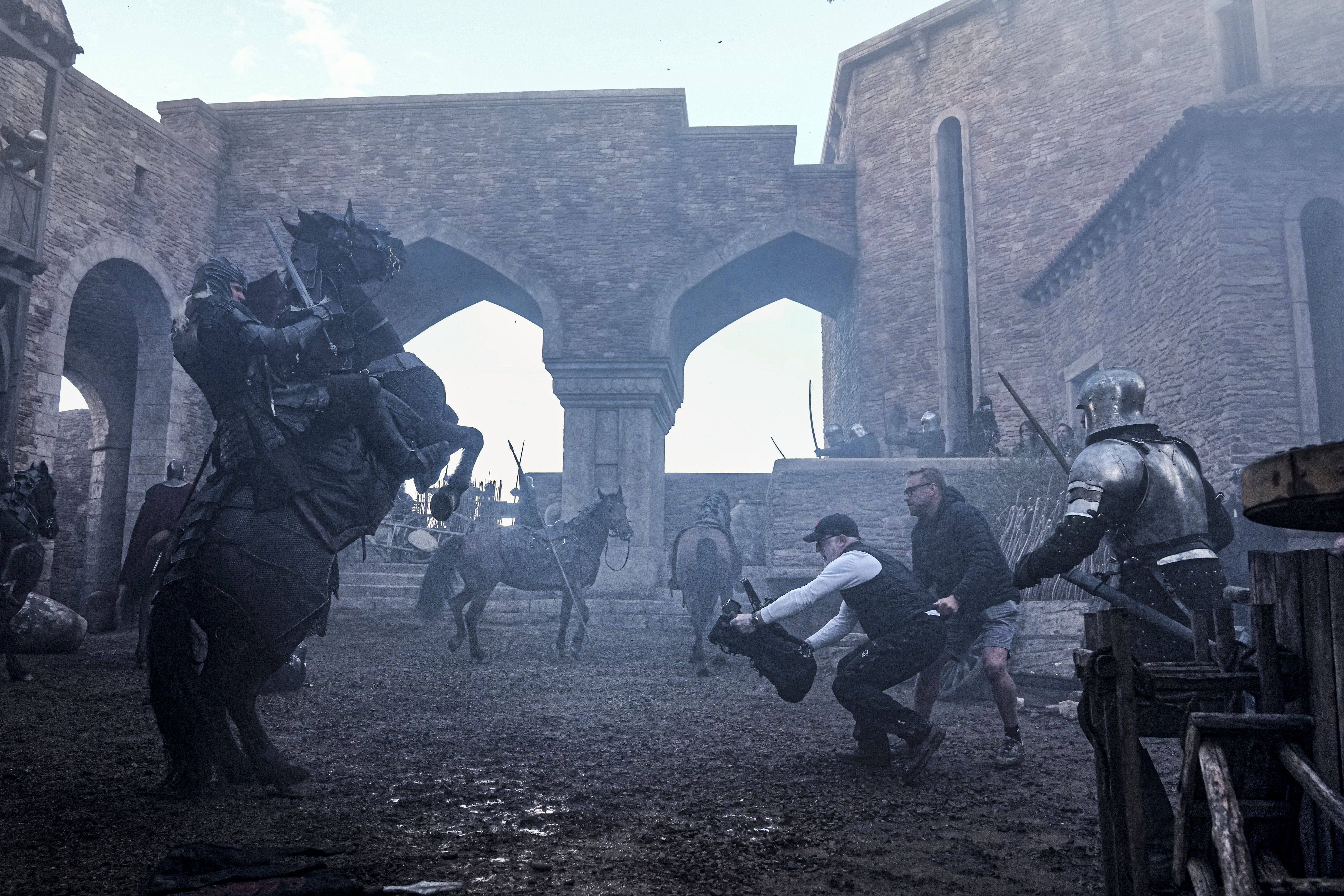
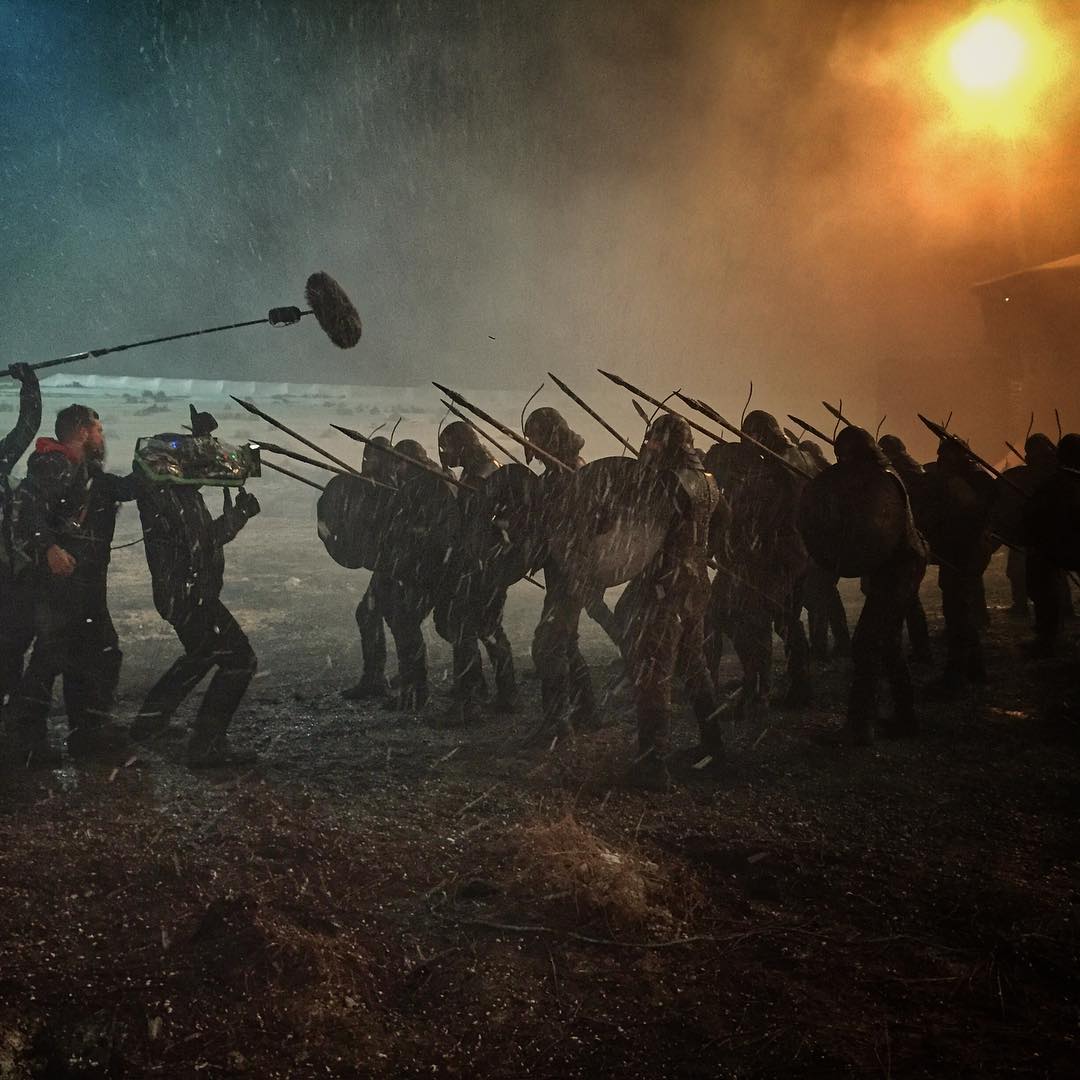
Like an enthusiastic schoolboy, Sean pulls out his phone to show us some behind the scenes footage of an epic, sprawling crane shot. The team are tracking a warrior leading the charge across open ground, through fire and over moats before climbing a siege ladder and mounting the battlements of a castle.
“I’m pretty convinced that at one point, Alex there, [one of the grips], gets lifted off the ground slightly, because they’re all sprinting and screaming at each other, swinging 4 tonnes of crane equipment. Fantastic!”
The shot is extraordinary - made all the more impressive by the fact that it was achieved using two shots in different locations, one for open ground and then a second on the backlot, stitched together digitally.
“Five years ago, you would join the shots by passing something in the foreground. Now, we’re morphing between the two shots seamlessly.”
Digital technology has changed a lot…
Film to Digital
“I think that switch coincided almost exactly with Game of Thrones. Before that, I was doing a mixture of film and digital work. The shift from film to digital was more of a takeover. It wasn’t so much that digital was presented to us as film was taken away from us. We’ve had a film camera on set for a certain look that the DP wants, but I have not shot on film since 2010.”
For Sean, the technical benefits of digital adoption outweigh any nostalgia for the format.
“I’m very happy with the switch. I love certain aspects of digital cameras. I think there’s a lot more accessibility for an operator. The viewfinders and monitors are ten times more accurate than what we were looking through with film.”
There are, however, some unexpected outcomes that Sean cautions against.
“That said, I don’t want to damn film… The indiscipline that has come with a 55-minute card, allowing cameras to be kept rolling? I don’t like that, but there’s not much I can do about it.”
Sean’s issue with this practice is not, as it turns out, one of on-set practicalities or the logistics of rushes.
“Although we’re not burning film, that data will have to be stored forever. Everything that we shoot on Dragon? They dare not delete it, even if it’s just an AD walking from the back of the set to the front with a cup of tea for the actor. This isn’t a criticism of anyone, just the nature of the beast. As long as that footage was shot on an HBO or a Warner Bros. set, it will be held in a data storage unit for millennia, burning up energy and heat. So that’s my argument for more disciplined shooting.”
Another great benefit Sean appreciates about the digital revolution is not just the technology itself, but once again, the people it empowers.
“I never wanted to light, but I lived in that world, so when I used to work with young Directors of Photography, who wanted to achieve great things, I would help with short films. When young people were trying to get a chance to make a film, that meant shooting on 8mm. If they got ten rolls of 16mm short ends, they’d be over the moon! And 35mm? Almost certainly out of the question. Now? Look at the Alexa Mini LF or a Sony. The quality of the sensors has removed the exclusivity of cinematography that used to keep the young talent out. Now, Roger Deakins and an unknown girl from college have the same blank canvas. If she can prove that she can make the scene look beautiful?... Yeah, I love that. The playing field has been levelled, and that is a huge advantage to digital photography, for people and the industry.”
Check the Gate
Sean’s concern for his colleagues, the industry and young people who want to join it stems from a deep-rooted sense of collective responsibility.
“I’m a member of the American SOC [Society of Camera Operators] and an associate member of the BSC [British Society of Cinematographers], but I’m especially proud to be a member of the ACO [Association of Camera Operators]. Collectively, we’re reminding the industry of the artistry of camera operation.”
So committed to this cause is Sean that he was responsible for leading the organisation through one of the industry’s most challenging periods in modern history.
“I was President of the ACO from 2018 to 2021, taking the association through Covid. Even without the nightmare of the pandemic, it’s a lot of work. The moment you take over, it’s thirty emails a day! You’re scribbling down speeches between takes! I was the fifth president, I think, but Zoe [Goodwin-Stuart] has taken up the mantle now, and we’ve just had our fifteenth anniversary as an organisation.”
What is Sean’s proudest achievement during his tenure as president?
“We introduced the ‘Friends of the ACO’ scheme, which has allowed trainees and film school students to be involved. They’re invited to meet-ups and AGMs. They have a say and get to be in the world, introducing themselves and meeting operators who are already walking the path. There are so many young people coming out of film school who dream of being a DP, and that’s fine. Why shouldn’t they? But being a good camera operator is a fantastic career in itself!”
As we wrap up the interview, Sean looks to the future with optimism and has a few words of encouragement for those wanting to join the industry.
“There may not be those same routes available that I had, but there are others. Yes, there are some groups and circles that can be hard to break into, but there are also cycles of change. People move up, and on. Things are changing and improving. Please, please, please. Keep going.”